
Exploring the History of the Boeing 737 Cockpit Design

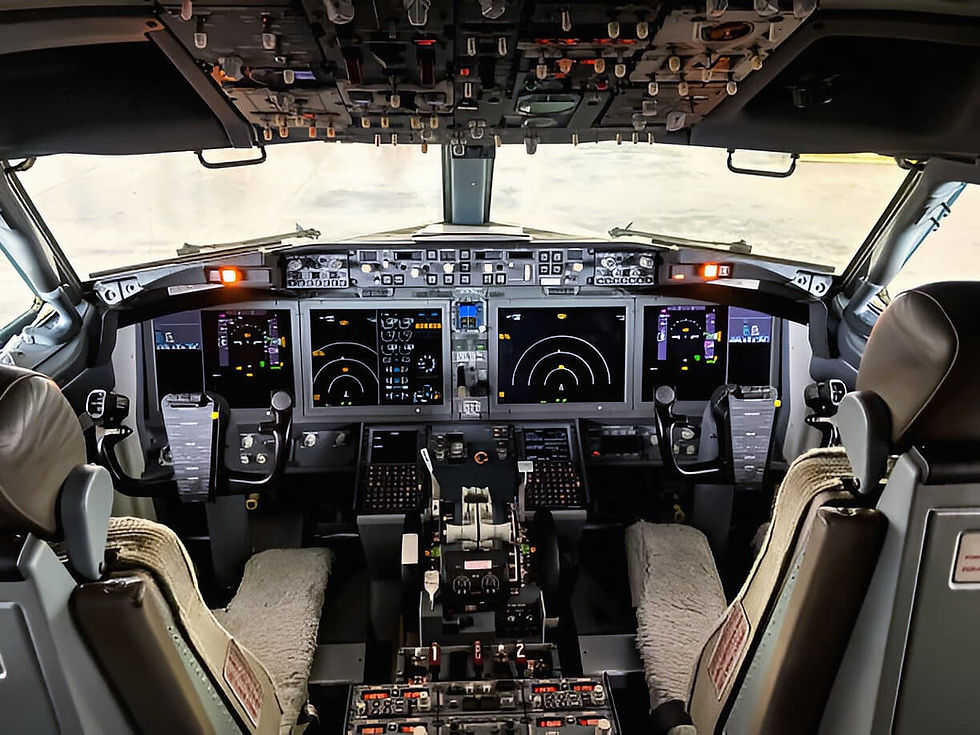
The Boeing 737 cockpit design has changed over time, but not dramatically. From its earliest days to the latest models, there has been a steady effort to introduce new technologies without disrupting how pilots interact with the aircraft.
For anyone interested in flight simulation, understanding the logic behind this evolution offers useful insight into what realism really means.
From Gauges to Glass
The original 737s, launched in the late 1960s, had fully analog flight decks. Round dials, physical switches, and mechanical instruments filled the panels. These cockpits were designed to match the standards of the time, when most commercial aircraft relied on what is now known as “steam gauge” instrumentation.
Everything was tactile and visual. Needles pointed to values, knobs controlled functions, and rows of labeled switches made up the overhead. It was a layout based on physical presence rather than digital flexibility.
A Transitional Phase
In the 1980s, the “Classic” series (737‑300/400/500) introduced limited glass elements. While much of the analog setup remained, digital displays started to appear alongside traditional gauges. These new screens aimed to reduce pilot workload without requiring a complete shift in habits.
Designers kept familiar shapes and positions, allowing pilots to adapt without relearning the layout from scratch. This cautious transition helped maintain continuity between generations.
Refining the Experience
By the late 1990s, the Next Generation series (737‑600/700/800/900) brought larger displays and a more unified look. LCD panels replaced many of the older mechanical instruments, but the overall structure of the cockpit stayed consistent.
The position of key controls, the feel of the columns, and the logic of the overhead remained grounded in past designs. Rather than reinventing the layout, Boeing focused on refining it. Even with newer avionics, the flight deck continued to feel familiar to those who had used earlier models.
Subtle Shifts in the MAX Era
The 737 MAX introduced updated systems, modern displays, and more advanced automation. Still, the physical layout held close to its predecessors. The look became cleaner, but the structure remained recognizable. Pilots transitioning from older models still found the controls where they expected them.
This consistency wasn’t just practical. It was intentional. Keeping the cockpit familiar across decades reduced training demands and preserved a sense of continuity.
Why This History Matters
The 737 cockpit story is one of gradual refinement, not reinvention. It shows that progress in aviation often comes through subtle changes layered over familiar foundations. This approach supports instinctive use, reduces cognitive load, and strengthens long-term confidence at the controls.
For simulation environments, where physical accuracy can shape immersion, this history highlights the importance of layout and design as much as display quality. Realism isn't only about visuals. It’s also about how the space is arranged and how naturally the controls fall to hand.


